The United Kingdom census is one of the most valuable resources available to family historians and genealogists. Taken every ten years, it provides a detailed snapshot of households across England, Wales, Scotland, and Ireland at a specific moment in time. For anyone researching their ancestry, census records can reveal family relationships, occupations, addresses, places of birth, and social conditions that would otherwise have been lost to history.
The first modern UK census took place in 1841, although earlier censuses had been conducted from 1801 onwards. The earlier returns from 1801, 1811, 1821, and 1831 were largely statistical headcounts intended to measure population growth and social change during the Industrial Revolution. They rarely recorded individual names, meaning they are of limited use for genealogy research today.
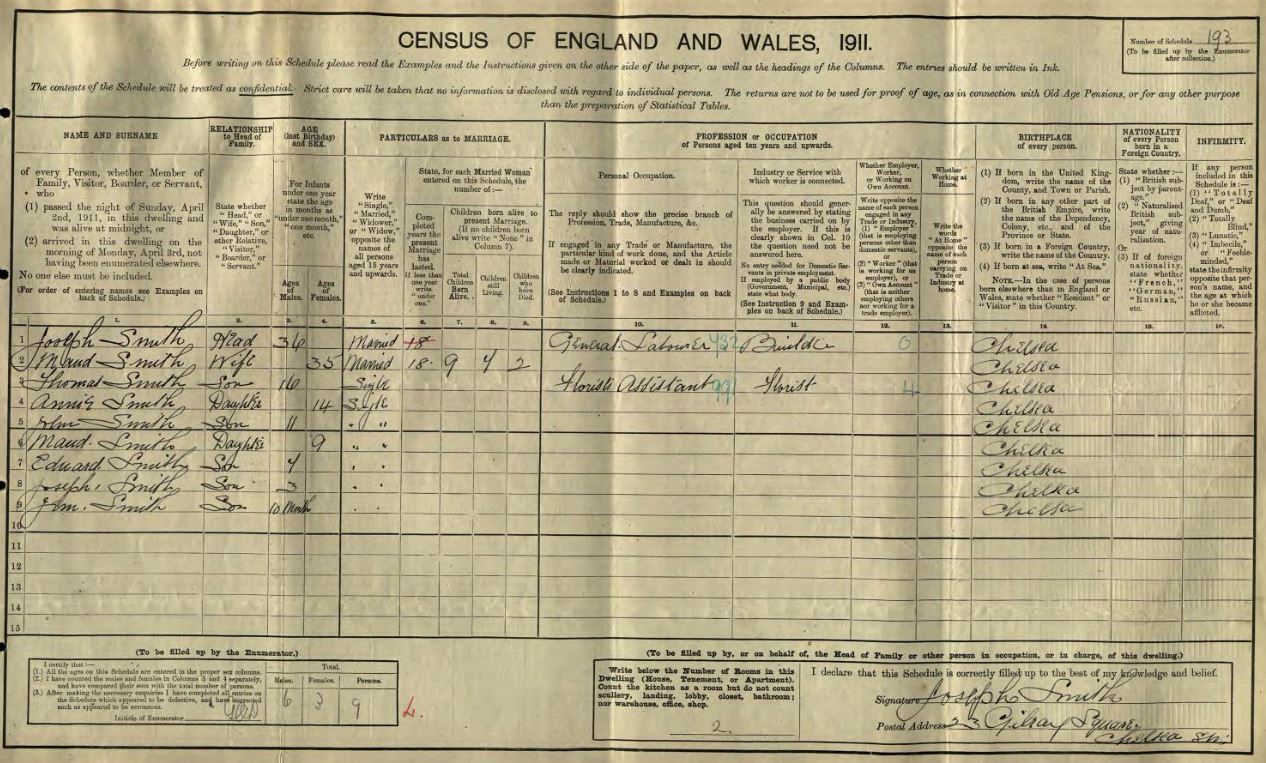
The 1841 census marked a major turning point because it was the first census to record every individual living in a household by name. This census established the foundation for the system still recognised today. Enumerators delivered forms to each household, and residents were expected to list everyone who had slept in the property on census night. The completed schedules were later copied into official enumeration books.
Although the 1841 census was groundbreaking, the information collected was fairly limited compared with later censuses. It recorded names, sex, occupation, approximate age, and whether a person had been born in the same county. Ages for adults were often rounded down to the nearest five years, which can sometimes make tracing ancestors more difficult.
From 1851 onwards, the census became far more detailed. Additional information included exact ages, marital status, relationship to the head of household, parish or county of birth, and more specific occupations. Later censuses added further questions relating to disabilities, employment status, language spoken, fertility, and housing conditions. These gradual changes reflected Victorian Britain’s growing interest in public health, social reform, and economic planning.
The census was normally carried out every ten years without interruption, but there was one important exception. No census was taken in 1941 because the country was fully engaged in the Second World War. Wartime disruption, rationing, evacuations, and military mobilisation made a nationwide census impractical. Instead, the government created the 1939 Register, which served as a wartime population record used for identity cards, ration books, and later the National Health Service.
Another major loss to genealogists occurred with the 1931 census for England and Wales. In December 1942, the records were destroyed during a fire at the storage facility in Hayes, Middlesex. No copies survived. Fortunately, the Scottish 1931 census had been stored separately in Edinburgh and still exists today. Because the 1941 census never took place, there is effectively a thirty-year gap between the surviving 1921 census and the 1951 census for England and Wales.
Census records are generally closed to the public for one hundred years in order to protect privacy. This means the 1921 census is currently the most recent fully available census for England and Wales. The 1931 census would normally have been released in 2032 had it survived, while the 1951 census is expected to become available in 2052.
Today, most UK census records can be searched online for free:
and also through genealogy websites such as
These services allow users to search by name, address, occupation, birthplace, or family members. Digitised images of the original census pages are often available (usually at a cost), allowing researchers to see the actual handwriten records.
Before widespread digitisation, census research was usually carried out using microfilm or microfiche readers in archives and local libraries. Many county record offices and large public libraries still maintain collections of census microfilms, especially for local history research. Researchers would manually scroll through reels of film to locate the correct parish, street, or enumeration district. While slower than modern online searching, these collections are still valuable when checking transcription errors or damaged scans.
The information stored within census records can paint a remarkably detailed picture of everyday life. A single household entry might reveal three generations living together, multiple occupations under one roof, lodgers sharing cramped accommodation, or children already working in factories and mines. Census records often expose social mobility, migration patterns, poverty, literacy levels, and changing family structures across decades.
Genealogists should remember that census records are not always completely accurate. Ages were sometimes guessed, names misspelled, and places of birth recorded inconsistently. Some people were entirely missed, while others occasionally appeared twice if they spent census night away from home. In some areas, pages were damaged, lost, or never properly completed. Researchers therefore often compare census data with birth, marriage, death, military, and parish records to confirm identities.